
The Gap Nobody Was Looking For
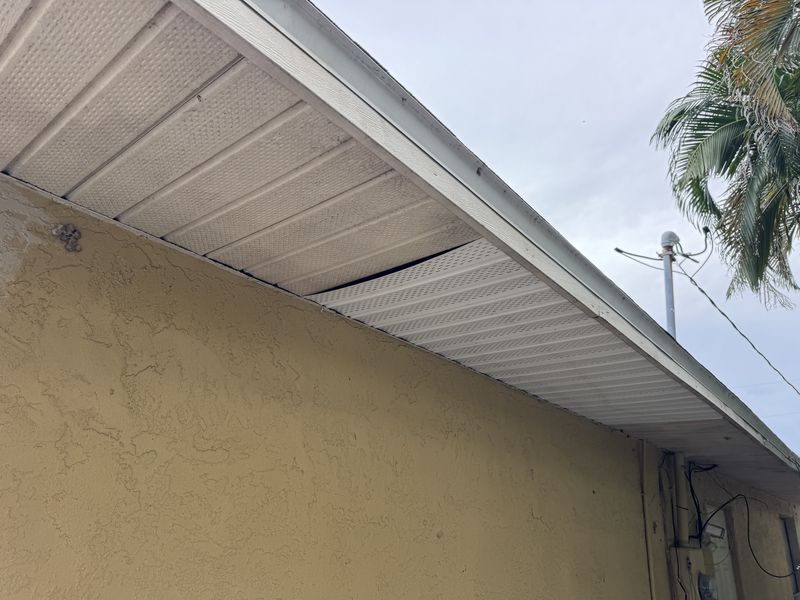
There's a moment I've witnessed more times than I can count.
I'm standing outside a beautiful home. Stone façade. Professional landscaping. The kind of property that took years to get right. And I'm pointing to where the soffit meets the roofline.
A gap the width of two fingers where the material pulled away from the fascia.
Or the corner of a garage door frame that never quite seated flush.
Or the space beneath a deck where the foundation meets the sill.
That's where they're coming in.
The homeowner studies the spot. Then they look at me. And eventually they say some version of the same sentence I've heard for 25 years:
"Nobody ever showed me that before."
Nobody was looking.
The Gap Nobody in the Industry Talks About
Here's what nobody in the industry wants to say out loud: the system around your home was never designed to solve this.
Builders build. They frame walls, run pipes, install vents, hang soffits, and move on to the next job. Their responsibility is construction — not tracking every quarter-inch gap where two building materials meet.
Pest control companies arrive after the fact. They bait, trap, treat, and schedule the next visit. They are not, as a rule, in the business of making themselves unnecessary. They are a subscription service, and subscriptions only work when the problem keeps coming back.
Nobody — not your builder, not your pest control tech, not your home inspector — is specifically responsible for identifying and permanently sealing every structural opening a rodent can use.
That gap in responsibility is exactly the gap rodents walk through.
It exists in $400,000 houses and it exists in $10 million houses. The zip code doesn't close it.
A Scene I Won't Forget
If you're of a certain age, you remember the MTV Cribs episode.
50 Cent. Farmington, Connecticut. A 50,000 square foot mansion on a property so perfectly matched to the rapper that even the address — 50 Popular Hill Road — seemed scripted. He'd bought it from Mike Tyson, who had bought it from a disgraced real estate developer, who had built it in 1985 as a monument to his own excess. The place had survived a Ponzi scheme conviction, a heavyweight champion's financial collapse, and $6 million in renovations. It had a nightclub in the basement, a helipad, a movie theater, and nine kitchens.
Early in my career, working for a national pest control company, I was sent to that property.
There were mice in a kitchen drawer.
Not because of neglect. Not because of poor housekeeping. Because during all that construction — all those architects and contractors, all that investment — not one person had been specifically tasked with making the structure rodent-proof. Every renovation closes some gaps and opens others. Mice find them before the paint dries.
I completed the service call. Then I drove home knowing it wasn't enough — and that it never would be until someone sealed the building itself.
That moment shaped the next 25 years of my career. Pest control was treating the symptom. What these buildings actually needed was a structural solution. Permanent. Guaranteed. Done once.
That's what I've spent my career building. That's Seal Em Out.
What's Actually in Your Dust
Think about the last time you wiped down a countertop or ran a cloth across a shelf. That dust is in every home. It settles on every surface. You breathe it every day.
A national NIEHS survey found detectable mouse allergen in 82% of U.S. homes — not just homes with visible activity. Mouse urine proteins and animal dander become part of household dust and stay there long after any rodent is gone. Every footstep, every air current, every time your HVAC kicks on, redistributes those particles through the air you're living in.
For children with asthma, the research is direct: higher exposure means more symptoms, more emergency room visits, and lower lung function — even at low levels of contamination.
This is the part nobody tells you: killing the mice does not clean what's already in your home. And as long as the structure remains open, new contamination keeps entering.
Sealing the building is the only intervention that actually stops it.
"I've Never Seen a Home That Couldn't Be Mouse-Proofed."
I mean that literally. Not as a tagline — as a professional statement backed by 25 years of crawling through crawlspaces, walking rooflines, and inspecting every category of residential construction from Cape Cod colonials to contemporary waterfront builds.
Every structure has entry points. Every entry point can be permanently closed.
Stainless steel and exterior-grade materials — materials that don't rot, compress, or get chewed through. When applied correctly, they outlast the animals attempting to enter.
Once the structure is sealed, the problem isn't managed. It's finished.
One repair. One warranty. No subscription.
Why Connecticut, Why Now
I built my first exclusion company in Connecticut. For years I worked in some of the finest homes in Fairfield County, Greenwich, Farmington, and along the shoreline — properties where owners had invested enormous care and resources into every detail of their homes.
And yet the same pattern repeated everywhere I went.
Rodent problems accepted as an unavoidable fact of homeownership. Quarterly pest control visits treated as just another line item. Homeowners never once told that a permanent structural solution existed.
The expectation had simply been set too low.
A few years ago I moved to Southwest Florida and built Seal Em Out LLC — same philosophy, same standards, same permanent results. No poison. No traps as a primary solution. Find every opening in the structure and close it permanently. The business grew, the reviews stacked up, and the model proved out in a new market.
Now we're back in Connecticut.
Not because we needed another territory. Because the problem was never solved there, and the solution we offer still doesn't exist at scale in that market. The homes are beautiful. The homeowners are informed and invested. And almost none of them have ever been offered what we do.
If you're in Westport, Darien, Greenwich, Farmington, or anywhere across the state and you're still scheduling quarterly pest control visits — there is a better option. There always was.
What to Do With This Information
Understand first that what you've been sold isn't the ceiling of what's possible. Recurring pest control is the default option because it addresses symptoms. Structural exclusion addresses the cause.
If you're in Connecticut or Southwest Florida and want to know what it would actually cost to make your home rodent-proof for good, we'll measure the structure remotely using satellite imagery and give you a firm quote before anyone sets foot on your property. No inspection fee. No obligation. Just a number.
Your home is worth more than a pest control contract. You always deserved a permanent solution. You just hadn't been offered one yet.
Wondering where roof rats could get into your home? See your roof from above, free. Type your address and look for the gaps.